
The Ultimate Guide to Omnichannel Hospitality: Unifying POS Cloud, Mobile Apps & AI Phone Ordering
Why Restaurant Automation is the #1 Profit Driver in Modern Hospitality
Modern restaurant operators face unprecedented challenges: rising labor costs, high staff turnover, aggressive aggregator commissions (often taking 25% to 35% of revenue), and increasing customer expectations for fast, frictionless service. In this environment, relying on legacy cash registers and disconnected third-party tablets directly hurts profitability.
Cloud POS software, self-ordering kiosks, branded mobile apps, and AI voice ordering bots are no longer separate gadgets. When united into a single omnichannel ecosystem, they transform every square foot of your restaurant into an automated, high-margin revenue engine.
Key Industry Benchmark
Restaurants that consolidate in-store touchscreens, tableside QR ordering, mobile apps, and Kitchen Display Systems (KDS) under a single cloud database report an average 35% increase in Average Order Value (AOV), a 62% drop in queue wait times, and near-zero order billing errors.
The 5 Pillars of a Unified Hospitality Ecosystem
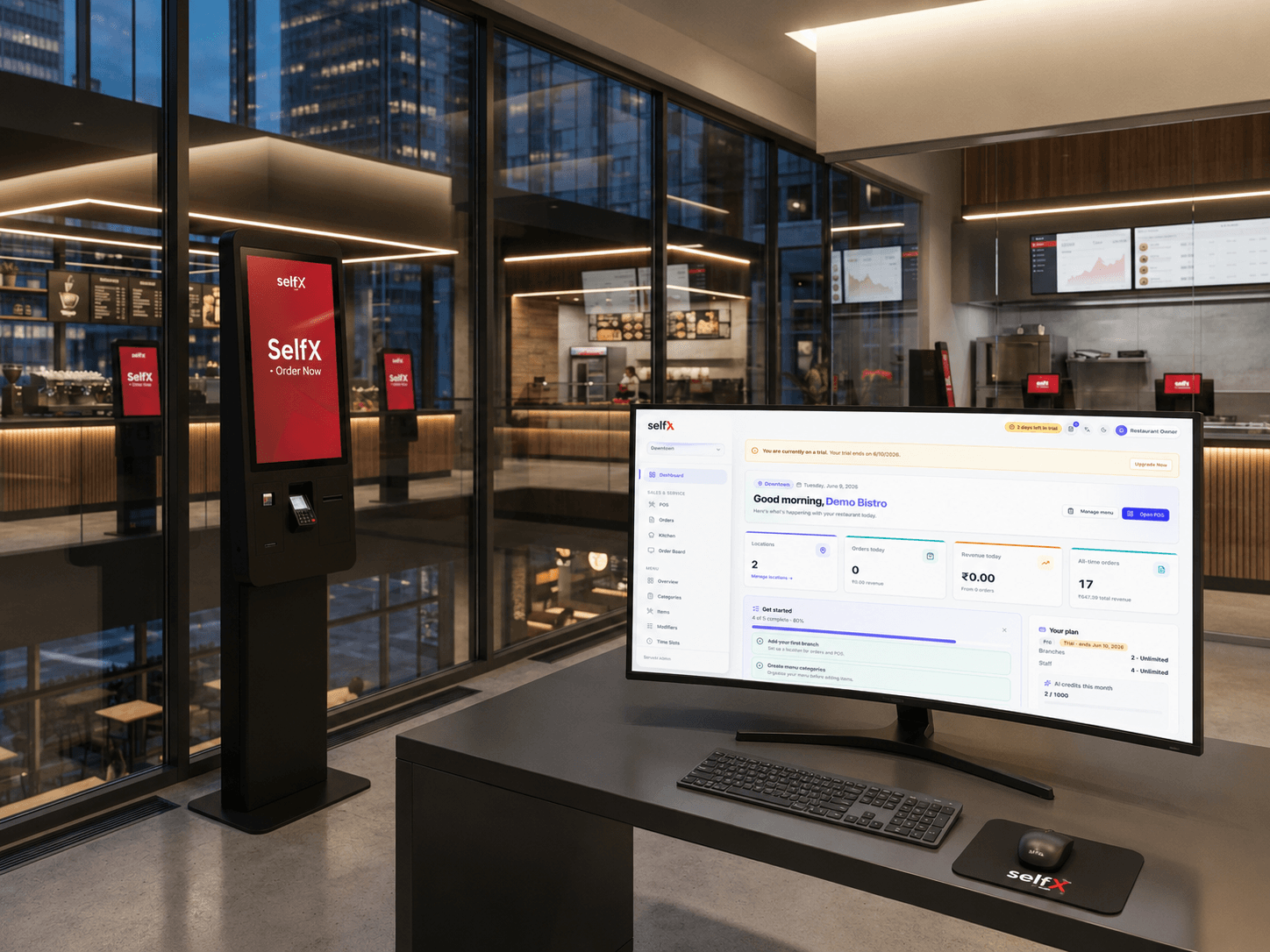
Rather than paying for 5 different software subscriptions that fail to sync, modern restaurant platforms unify all guest and kitchen touchpoints onto a single real-time data spine:
1. Centralized Cloud POS & Instant Multi-Location Management
Manage menus, combo items, dynamic tax rules, and promotional discounts across 1 to 100+ locations in real time. Update a price or mark an out-of-stock dish in your dashboard, and the change updates instantly across all counter terminals, kiosks, web portals, and mobile apps within seconds.
2. Smart Self-Ordering Touchscreen Kiosks
Freestanding and countertop kiosks greet guests at entrances with vibrant, high-definition visual menus. Kiosks never forget to upsell: they intelligently recommend extra toppings, beverage combos, and chef specials on every interaction—increasing dessert and side sales by up to 40% without requiring pushy cashier scripts.
3. AI Phone Ordering & Automated Voice Reservation Agent
During peak dinner rushes, front-desk staff frequently miss phone calls or put high-paying catering clients on hold. An AI Phone Ordering agent connects directly to your phone line. It understands conversational food requests, accents, and dietary notes, processes table bookings, answers parking queries, and transmits confirmed takeout orders directly into your kitchen KDS.
4. Contactless Tableside QR Code & Branded Mobile App
Empower seated diners to scan a table QR code, browse interactive dishes with high-res photography, re-order drinks mid-meal, split bills by seat, and pay via UPI, Apple Pay, Google Pay, or Credit Card without waiting for a server.
5. High-Speed Kitchen Display System (KDS) & Expeditor Routing
Eliminate noisy, grease-stained paper ticket printers. Incoming orders from all channels are color-coded, sorted by cook station (Grill, Fryer, Assembly, Bar), and paced dynamically so all items for a single table finish cooking simultaneously.
The Financial Impact: Analyzing the ROI of Self-Service Automation
Let us examine the financial performance of an average quick-service restaurant (QSR) serving 300 orders per day before and after deploying unified self-service automation:
| Metric | Legacy Counter POS | Unified Self-Service | Net Improvement |
|---|---|---|---|
| Average Order Value (AOV) | ₹450 | ₹610 | +35.5% increase |
| Order Processing Time | 140 seconds | 45 seconds | 67.8% faster throughput |
| Front-of-House Labor Cost | 3 Cashiers (₹60,000/mo) | 1 Floor Host (₹20,000/mo) | ₹40,000/mo saved |
| Order Accuracy / Remakes | 92.4% (7.6% error rate) | 99.8% accurate | Near-zero food waste |
Step-by-Step Implementation Blueprint for Restaurant Chains
- Digital Menu Setup: Organize your menu items with clear photos, customizable modifiers, nutritional tags, and combo bundles. Ensure pricing rules and regional tax rates are configured in the cloud.
- Kiosk Placement & Guest Flow: Position self-ordering kiosks directly facing main entrances with clear line-of-sight and ample queuing space that does not block dining tables.
- Staff Hospitality Training: Repurpose traditional cashier staff into welcoming floor hosts who guide first-time guests, deliver meals to tables, and enhance customer care.
- Kitchen Workflow Tuning: Organize KDS monitors by cook station. Set 5-minute yellow alerts and 10-minute red escalation timers to maintain smooth kitchen momentum.
Conclusion
Modern diners value speed, control, and visual clarity. By connecting self-ordering kiosks, cloud POS, mobile apps, and AI phone agents into one unified platform, restaurants reduce overhead, increase revenue, and create memorable dining experiences.