
7 Proven Strategies to Reduce Kitchen Bottlenecks & Order Wait Times using Kitchen Display Systems (KDS)
The Kitchen Bottleneck Dilemma
During peak dinner rushes, traditional kitchen printers churn out long ribbons of paper tickets. Tickets get lost, stained with sauce, or misread. Chefs shout across noisy cooking lines, and expo managers struggle to track which table is waiting on an appetizer.
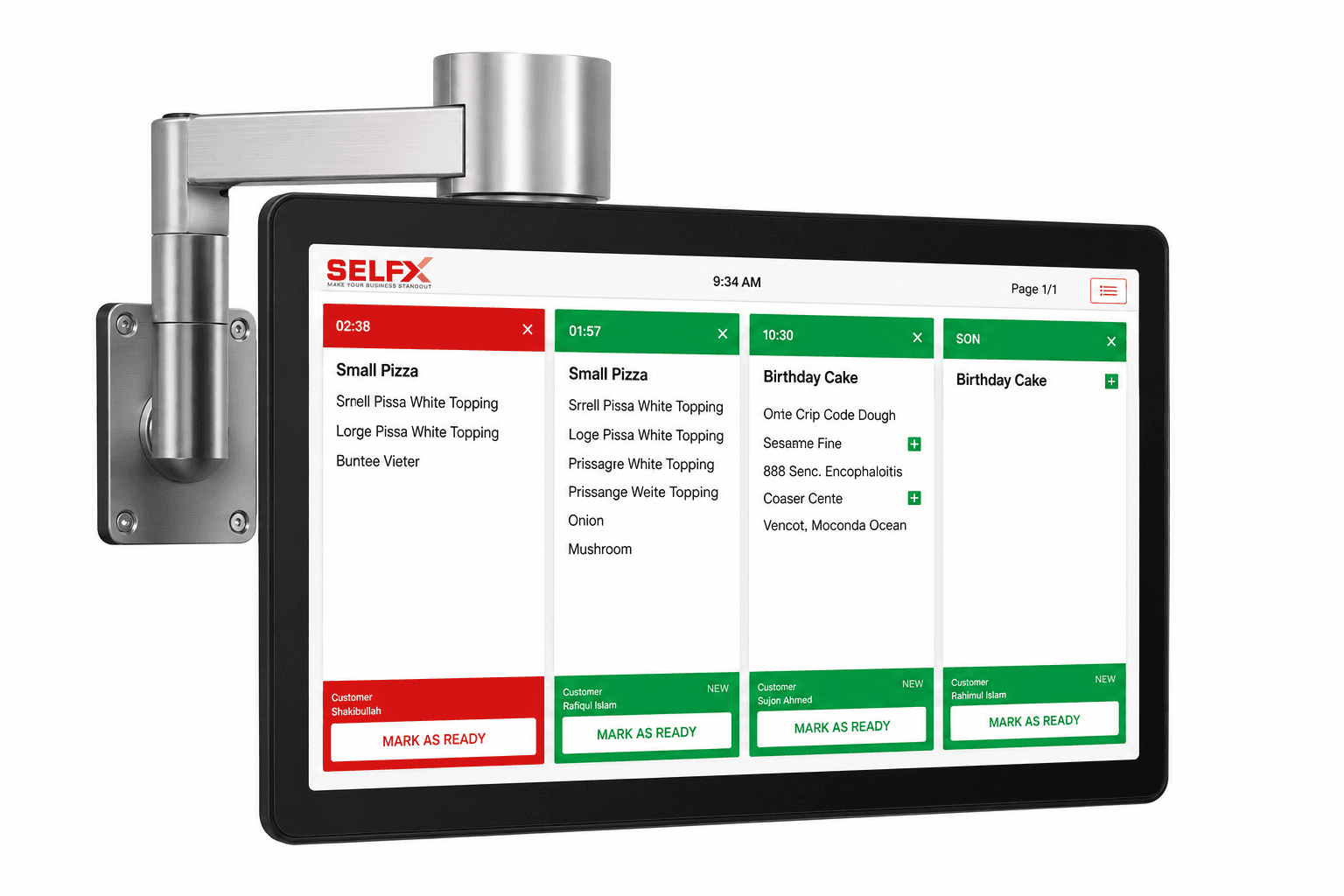
A smart Kitchen Display System (KDS) replaces messy paper printers with synchronized digital screens that optimize preparation times, track item progress, and streamline kitchen communication.
7 Strategies for Maximum Kitchen Speed
1. Station-Based Order Splitting
Instead of printing an entire multi-course order on a single ticket, a KDS routes individual items to specific prep stations: cold salads to the Pantry, steaks to the Grill, and beverages to the Bar. Each station only sees the items they need to make.
2. Synchronized Prep Pacing
Smart KDS logic holds fast-cooking items (like french fries that take 3 minutes) until slow-cooking items (like a medium-well burger that takes 10 minutes) are nearly done. Everything arrives fresh and hot at the pass at the exact same moment.
3. Color-Coded Time Alerts
Orders display dynamic color indicators: Green for on-time, Yellow for approaching target prep time (e.g. 8 minutes), and Red for delayed tickets (e.g. 12+ minutes). Kitchen managers can spot delays instantly before they affect guest satisfaction.
4. One-Tap Bump and Recall
Cooks tap a wireless bump bar or touchscreen to mark dishes complete. If an item is accidentally bumped, it can be recalled with a single tap, preventing missed dishes.
5. Digital Expeditor Screen
An expeditor screen at the plating station aggregates all items for each table, verifying that all dishes are complete before dispatching runners to the dining room.
6. Real-Time Menu Out-of-Stock (86'ing)
When the kitchen runs out of an ingredient, chefs can tap "86" on the KDS. This instantly disables the item across all customer kiosks, online ordering portals, and server handhelds within seconds.
7. Historical Bottleneck Analytics
Track average cook times by hour, station, and dish. Identify which recipes consistently slow down the line and adjust prep workflows or staffing accordingly.
Summary
Switching from paper tickets to a cloud-synced KDS eliminates miscommunication, reduces food waste by over 30%, and ensures every meal is served quickly and accurately.